

When people search for laser tag games, they’re usually not asking what is laser tag.
They’re trying to figure out what actually happens during the session and why one laser tag experience feels intense and coordinated while another feels messy or forgettable.
From running laser tag Singapore sessions across schools, companies, and mixed-age groups, one thing is consistent:
the difference is rarely the arena or the laser tag equipment. It’s the laser tag game mode.
Once you step into the arena, the game mode decides how you move, who you talk to, and whether you play aggressively, cautiously, or as a team. Understanding this before you play laser tag helps you choose the right format for your group and get real value out of the session.
Why the Game Mode Matters More Than the Gear
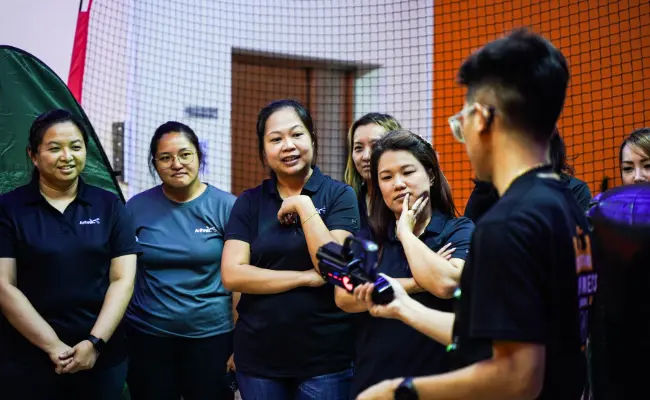
Many first-timers assume the excitement comes from laser guns or flashy effects.
In practice, those are just tools.
What actually shapes the laser tag session is:
- what the objective of the game is
- how players score points
- how teams interact with the other team
- whether players have to protect something, retrieve something, or simply outplay opponents
When the rules of the game are unclear, players wander, tag randomly, or disengage.
When the laser tag game is well-defined, even beginners stay focused and involved.
That structure is what turns a simple laser tag activity into a meaningful team building activity.
How Different Laser Tag Games Change Player Behaviour
From an operational standpoint, different game formats bring out very different reactions:
- Some games reward positioning and communication at the same time
- Others force fast decision-making under pressure
- Objective-based formats require players to plan routes and assign roles
- Individual formats push awareness and self-control rather than teamwork
This is why no single game should dominate a full session. A well-run team bonding session balances pace, pressure, and cooperation.
Domination: The Most Accessible Team-Based Format

Domination is usually the first laser tag game mode we introduce, especially for new players.
The goal is simple: work together to outperform the other team within a fixed time limit.
What Happens During the Game
- Players start with identical laser tag equipment
- Tags affect scoring or temporarily disable opponents
- The team with the higher score wins
Because success depends on group performance, players naturally communicate, move together, and watch each other’s blind spots.
Why It Works So Well
Domination is effective because:
- it is easy to understand
- players don’t have to memorise complex rules
- everyone contributes, regardless of fitness level
For corporate team building, this is often the warm-up round. It helps teams get comfortable with the arena and learn how to play laser tag without pressure.
The Revival: When Laser Tag Becomes Strategic
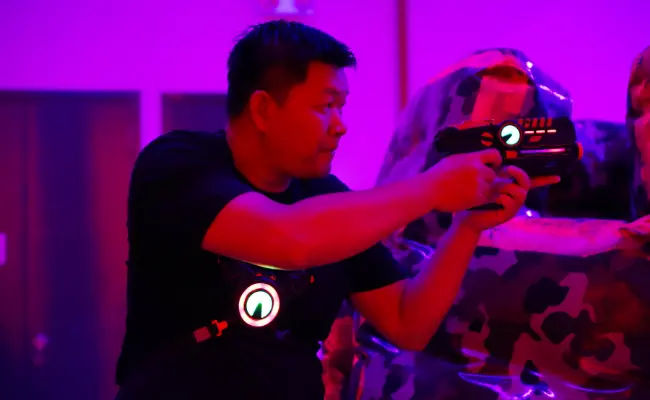
The Revival changes the flow completely.
Instead of focusing only on tagging, teams must protect or recover key objectives of the game while still engaging opponents.
How the Experience Shifts
Players have to:
- decide who attacks and who defends
- protect objectives while pushing forward
- adapt when plans fall apart mid-game
From an operator’s perspective, this is where teams stop playing individually and start functioning as a team.
Who This Mode Suits Best
The Revival works especially well for:
- adult groups
- corporate team building events
- teams that enjoy planning and problem-solving
It is one of the clearest examples of how a laser tag session can become a structured collaboration exercise without forced icebreakers.
Capture the Flag: Clear Objectives, Real Coordination

Capture the Flag is one of the most objective-driven formats available.
Each team must defend its own base while attempting to infiltrate the enemy base and retrieve the flag.
How Players Adapt
Very quickly, groups realise:
- solo charges rarely succeed
- timing matters more than speed
- communication determines success
Because the win condition is clear, players stay engaged from start to finish. For many groups, this becomes the most memorable laser tag experience of the session.
Last Man Standing: Individual Focus, Short Bursts
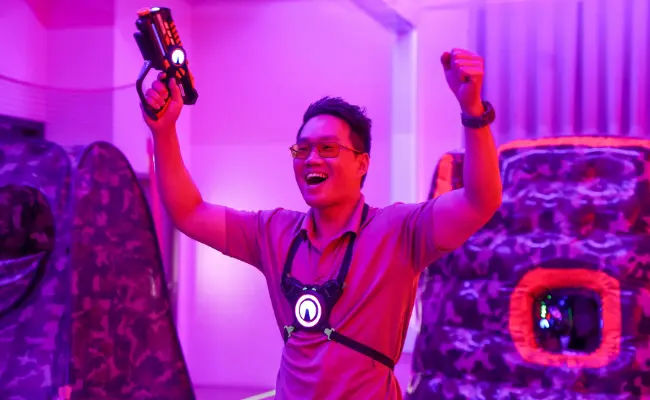
Last Man Standing removes teams entirely.
Players compete individually, and survival becomes the only goal.
Why It’s Used
This mode:
- adds variety
- increases tension
- highlights personal habits and positioning
It’s usually run in short rounds and works best as a contrast to team-based formats, not as the core laser tag game.
Why Mixing Game Modes Improves Engagement
.webp)
From a facilitation perspective, repeating the same game drains energy fast.
The strongest sessions usually rotate:
- one simple team-based game
- one objective-driven strategy game
- one faster or individual-focused round
This keeps engagement high and ensures different personalities can shine. It also prevents fatigue, especially during longer team building events.
Choosing the Right Laser Tag Game for Your Group
There is no single answer to what is the best laser tag game.
The right choice depends on your goal.
- For bonding and communication: team-based formats
- For planning and coordination: objective-driven games
- For intensity and reactions: individual modes
If your group includes mixed ages or fitness levels, rotating games creates a more inclusive session. Practical prep matters too, especially for indoor laser tag, where comfort affects performance.
Planning Factors That Actually Matter
When organising a team building event, these considerations make the difference:
- scalability: games can be adjusted for small or large groups
- clarity: clear briefings prevent confusion
- variety: different formats avoid repetition
- balance: good design minimises skill gaps
A professional provider will help structure the session so everyone stays involved with a clear purpose.
Why Laser Tag Games Keep Teams Engaged
Laser tag works because the games themselves are flexible. Change the game to a different objective, and the entire dynamic shifts.
Whether players are working together, competing individually, or protecting objectives, the variety allows your laser tag session to adapt to different group needs. That flexibility is why laser tag remains a reliable option for a wide range of team building events.
Laser Tag Games – Frequently Asked Questions
What are laser tag games?
Laser tag games are structured missions that define objectives, scoring, and roles. They determine how players move, communicate, and interact during the session.
How many games are usually played in one session?
Most professional setups rotate multiple games so players experience different styles of play out of the same session.
Is laser tag suitable for corporate team building?
Yes. Laser tag is commonly used for corporate team building because it encourages communication, cooperation, and shared decision-making.
Can beginners play laser tag easily?
They can. With clear instructions, new players usually adapt within the first round.
Do different laser tag games use different scoring systems?
Yes. Some focus on team points, others on objectives or survival. Scoring changes based on what the objective of the game is.