
.webp)
If you’re looking for a team building activity that people will actually participate in — not just tolerate — laser tag in Singapore tends to rise to the top of the shortlist very quickly.
That’s not because laser tag is a trendy novelty. It’s because, when executed properly, it solves a set of problems organisers repeatedly face:
- Low engagement across mixed teams
- Activities that favour only outspoken or athletic participants
- Events that feel “fun” but leave no lasting impact
In Singapore, where teams are often diverse in age, background, and working style, choosing the right team building format matters more than ever. A poorly chosen activity doesn’t just waste budget — it creates discomfort, disengagement, and post-event complaints.
This guide looks at laser tag in Singapore as a team building game, not just an activity. We’ll break down how laser tag is experienced on the ground, how organisers should evaluate formats, and what separates an average laser tag event from the best laser tag experiences teams talk about long after the day ends.
Why Laser Tag Continues to Be One of the Most Popular Team Building Games
Among all team building events in Singapore, laser tag remains one of the most popular options — and not by accident.
Laser tag is a structured, time-bound, objective-driven experience. That combination creates immediate focus. Unlike discussion-heavy workshops or casual icebreakers, people don’t need to “warm up” socially. They’re pulled into the game within minutes.
For organisers, this matters because:
- Participation happens naturally
- Energy levels are easy to manage
- Outcomes don’t depend on personality type
When people play laser tag as a team, success depends on coordination, awareness, and communication skills — not physical strength or confidence. That makes it especially suitable for mixed groups, cross-department teams, and company-wide programmes.
This is why laser tag Singapore formats are widely used across corporate offsites, government engagement days, and even crossover formats like birthday parties and mixed-age gatherings.
How Teams Actually Experience Laser Tag (Beyond the Marketing)
.webp)
Many descriptions of laser tag focus on equipment, visuals, or technology. In reality, what teams remember has very little to do with the laser tag guns themselves.
A strong laser tag experience feels:
- Focused rather than chaotic
- Competitive without being intimidating
- Fast-moving but not rushed
From the participant’s perspective, the moment they step into an indoor laser tag arena or sheltered space, a few things should happen quickly:
- Objectives are explained clearly
- Teams know what they’re trying to achieve
- Everyone understands how to contribute
When this happens, teams start adapting almost immediately. They communicate, reposition, and react together — often without realising they’re doing it. That’s where laser tag shifts from a fun activity into a meaningful team building game.
Why Laser Tag Works Across Different Personality Types
One reason laser tag is a popular team building game is that it doesn’t reward just one type of participant.
In a typical laser tag game, teams need:
- Observers who spot opponents
- Communicators who relay information
- Movers who control space
- Strategists who adjust plans
No single role dominates. Quieter team members often become critical information points. More vocal participants learn to give clearer, shorter instructions. Over time, teams realise they have to rely on each other.
This balance is why laser tag experiences tend to outperform sports days, which often favour athletic participants, and puzzle-based activities, which may engage only a small subset of the group.
Laser Tag vs Other Team Building Formats
When organisers compare activities, they often weigh laser tag against workshops, escape rooms, or physical sports.
Laser tag sits in a practical middle ground.
It’s more dynamic than discussion-based sessions, but more controlled than open sports. It offers immediate engagement without demanding creativity, performance, or public speaking. For many teams, this makes it easier to justify internally — especially when senior stakeholders or mixed groups are involved.
Compared to puzzle-based activities, laser tag creates continuous interaction rather than isolated problem-solving. Compared to contact sports, laser tag is non-contact, inclusive, and easier to scale.
That’s why laser tag for team building continues to be selected for both first-time organisers and repeat programmes.
Understanding Laser Tag Game Modes and Why They Matter
One of the biggest differences between an average and the best laser tag event lies in game modes.
Many organisers assume laser tag is just about tagging opponents. In reality, well-designed laser tag games use different objectives to shape behaviour.
Common laser tag game modes include:
- Objective-based scoring
- Zone control formats
- Team elimination with respawn rules
- Time-based point accumulation
Each of these game modes encourages different types of interaction. Some reward coordination and positioning. Others emphasise communication or adaptability.
The best laser tag experiences use a mix of game modes rather than repeating the same format. This keeps energy high and allows different team members to shine across rounds.
Indoor vs Outdoor Laser Tag: Choosing the Right Setup
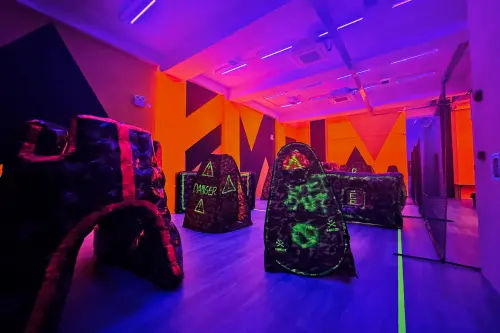
In Singapore, indoor laser tag formats are often preferred for corporate and company events.
Indoor Laser Tag
An indoor laser tag environment offers:
- Air-conditioning
- Controlled lighting and acoustics
- Predictable pacing
This makes it suitable for professional settings, mixed-age groups, and programmes where organisers need consistency and control.
Outdoor or Sheltered Laser Tag
Outdoor or semi-sheltered formats work better for:
- Large-scale engagement days
- Carnival-style team building events
- Groups looking for a more open, energetic atmosphere
Both formats can support strong outcomes. The choice depends on group size, weather considerations, and the tone you want to set.
Scaling Laser Tag for Small Teams vs Large Groups
Laser tag is a scalable team building activity, but scale requires planning.
For smaller groups (10–30 pax), sessions tend to feel more intense and tactical. Everyone plays at the same time, and communication patterns develop quickly.
For larger groups (40–300+ pax), success depends on:
- Structured rotations
- Clear transitions between rounds
- Adequate facilitator-to-participant ratios
Poorly planned large sessions often suffer from long waiting times and disengagement. Well-planned ones feel smooth, energetic, and surprisingly controlled.
This is where operator experience matters most.
Common Planning Mistakes Organisers Still Make
Despite laser tag being a well-known format, mistakes still happen — often because organisers assume the activity will “run itself”.
Treating Laser Tag as Casual Play
Without structure, louder participants dominate while others disengage. The session becomes fragmented instead of collaborative.
Overcrowding Rounds
Trying to save time or cost by squeezing too many people into one session leads to confusion, safety concerns, and frustration.
Skipping Proper Briefings
Clear instructions are essential. When teams don’t understand objectives or rules, the first round is wasted on confusion.
Choosing Based on Price Alone
Affordable laser tag options exist, but low cost should not come at the expense of facilitation, planning, or safety. Equipment alone doesn’t create a good experience.
Safety, Equipment, and Professional Standards
Laser tag is a non-contact activity, but safety still matters.
Professional setups use:
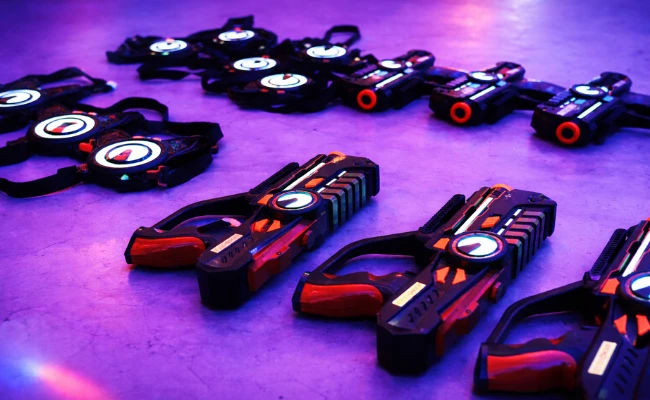
- Reliable laser tag equipment
- Calibrated laser tag guns
- Clear safety boundaries
- Facilitator-led monitoring
State of the art systems improve reliability, but execution matters more than technology. Well-tested equipment combined with trained facilitators creates a smooth, safe experience for any group.
Laser Tag for Corporate, Government, and Mixed Groups
Corporate Teams
Laser tag is a strong option for corporate team building when the goal is engagement, communication, and cohesion. It works especially well for teams that spend most of their time in meetings or behind screens.
Hierarchy fades quickly. People focus on objectives, not titles.
Government and Statutory Boards
For government teams, predictability and professionalism matter. Laser tag works well because it’s rule-based, inclusive, and easy to justify internally.
Indoor laser tag formats are often preferred to manage environment and optics.
Mixed-Age or Cross-Function Groups
Because laser tag does not rely on speed or strength, it performs well across different age groups and departments. Everyone has a role to play at the same time.
When Laser Tag May Not Be the Right Choice
Being honest helps organisers plan better.
Laser tag may not be suitable if:
- The group strongly prefers quiet, reflective activities
- Physical movement is highly restricted for most participants
- The objective is deep analytical or technical training
In these cases, laser tag can still work as a shorter energiser rather than the main programme.
What a Well-Run Laser Tag Event Looks Like
A professional laser tag event typically includes:
- A clear, structured briefing
- Multiple laser tag games using different game modes
- Active facilitation throughout
- Smooth rotations to manage energy
When this is done well, the experience feels fun and purposeful — not chaotic or exhausting.
Why Laser Tag Remains a Reliable Choice in Singapore
Singapore is known for efficiency and high expectations. Team building activities are often scrutinised for value, relevance, and inclusivity.
Laser tag in Singapore continues to perform well because it:
- Engages teams quickly
- Scales reliably
- Encourages communication without forcing it
- Balances fun and professionalism
That combination is hard to replicate with many other formats.
How Laser Tag Supports Different Team Building Goals (Not Just “Bonding”)
One common misconception is that laser tag is only useful when the goal is “fun”. In practice, organisers choose laser tag for very different reasons — and the format can be adjusted accordingly.
For teams struggling with silos, laser tag naturally breaks them down. Because players have to rely on real-time information from teammates, departments that rarely interact are suddenly required to coordinate. Communication becomes practical, not theoretical.
For newly formed teams or post-restructure groups, laser tag helps accelerate familiarity. Instead of asking people to introduce themselves or participate in awkward icebreakers, shared pressure and shared objectives do the work. People learn how others react, decide, and support each other — quickly.
For teams experiencing fatigue or low morale, laser tag acts as a reset. It reintroduces energy without demanding emotional vulnerability or forced participation. This is why many organisers position laser tag early in an offsite or engagement day, before moving into other segments.
Laser tag is a flexible team building game because it doesn’t impose meaning. Teams generate their own takeaways through experience.
Budgeting for Laser Tag Team Building: What Actually Affects Cost
When organisers ask whether laser tag is affordable, the real question is usually what are we paying for.
The cost of a laser tag event isn’t driven by just equipment. Pricing is influenced by:
- Group size and rotation complexity
- Number of facilitators required
- Venue type (indoor, outdoor, on-site, off-site)
- Duration and number of game modes
- Level of planning and on-the-ground support
Affordable laser tag options do exist, but it’s important to understand trade-offs. Lower-cost setups may reduce facilitator count, simplify game design, or compress rotations. This can work for small social groups, but often struggles at scale.
For company or organisation-wide programmes, value comes from smooth execution. When sessions run on time, instructions are clear, and energy stays consistent, organisers avoid last-minute issues that cost more — both financially and reputationally.
A realistic budget should prioritise facilitation and planning over novelty. Reliable execution almost always delivers better outcomes than flashy features.
What Participants Worry About (and How Good Laser Tag Design Solves It)
From the organiser’s side, laser tag looks straightforward. From the participant’s side, there are often unspoken concerns.
Some worry they’ll be too slow or unfit. Others worry about looking silly, being singled out, or not knowing what to do. These concerns don’t always surface — but they affect engagement if not addressed.
Good laser tag experiences reduce anxiety by design:
- Clear briefings remove uncertainty
- Simple objectives prevent overwhelm
- Team-based scoring avoids individual pressure
- Short rounds prevent fatigue
When people feel safe and informed, participation follows naturally. This is one reason indoor laser tag formats work so well for professional groups — the environment feels contained, predictable, and controlled.
Organisers don’t need to motivate participation manually. The structure does it for them.
Designing Laser Tag for Mixed Energy Levels
Not every team wants maximum intensity. Many organisers worry laser tag will be “too much” for quieter or senior participants.
The reality is that laser tag intensity is adjustable.
By selecting the right laser tag game modes, facilitators can:
- Emphasise strategy over speed
- Reduce physical movement without reducing engagement
- Encourage positioning and communication instead of chasing
This makes laser tag suitable for mixed energy groups, including teams with varying fitness levels or age ranges. Participants contribute differently, but meaningfully, at the same time.
The key is not treating all laser tag games the same. A well-designed programme balances fast-paced rounds with more tactical ones, keeping the experience inclusive and sustainable.
Why Briefings Matter More Than Most Organisers Realise
One of the biggest differences between a smooth laser tag experience and a frustrating one happens in the first ten minutes.
A proper briefing does more than explain rules. It sets expectations, reduces hesitation, and aligns the group around shared objectives.
Effective briefings:
- Explain why the objective matters
- Clarify how teams score points
- Set safety and movement boundaries clearly
- Reinforce that success depends on teamwork
When briefings are rushed or unclear, the first round becomes a practice run instead of a meaningful experience. Energy dips, confidence drops, and facilitators spend the rest of the session correcting misunderstandings.
From an organiser’s perspective, insisting on proper briefings is one of the simplest ways to improve outcomes without increasing budget.
Laser Tag as Part of a Larger Programme
Laser tag doesn’t have to stand alone.
Many successful team building events use laser tag as:
- An opening energiser before workshops
- A midpoint reset during long programmes
- A finale that brings everyone back together
Because laser tag is time-bound and modular, it integrates well with other formats. Sessions can be adjusted to fit within broader agendas without feeling rushed or incomplete.
For organisers planning full-day or multi-segment programmes, laser tag provides a reliable anchor point — a moment where everyone is present, engaged, and aligned.
Setting the Right Expectations Internally
One overlooked step in planning is internal expectation-setting.
When stakeholders understand what laser tag is — and what it isn’t — approval becomes easier. Laser tag is not a deep training intervention. It is not a reflective workshop. It is a structured, experiential team activity.
Framing matters. Positioning laser tag as a way to:
- Improve communication skills through action
- Encourage collaboration under pressure
- Build rapport across teams
helps align expectations with outcomes.
When expectations are realistic, feedback is almost always more positive.
Final Thoughts for Organisers
Laser tag is not just a game — laser tag is a structured experience that, when designed properly, delivers consistent results for team building.
Whether you’re organising for a company offsite, a department session, or a large-scale engagement day, success comes down to planning, facilitation, and execution — not just the activity itself.
If you’re looking for a team building option that is proven, adaptable, and genuinely engaging, a well-run laser tag experience remains one of the safest and most effective choices available.
If you’d like to explore how a laser tag event could be designed for your team, or clarify what format would work best for your objectives, feel free to contact us for a clear, no-pressure walkthrough of the options.
Frequently Asked Questions
Is laser tag suitable for corporate team building in Singapore?
Yes, provided it’s structured and facilitated properly. It’s widely used across corporate and public sector teams.
What makes a team-focused laser tag session effective?
Clear objectives, thoughtful pacing, and active facilitation matter far more than equipment alone.
It can, as long as the format is adjusted to suit the group and objective.
Are laser tag systems safe?
Laser tag uses non-contact infrared technology, making it suitable for mixed groups.
How long should a team building laser tag programme run?
Most sessions range from 1.5 to 3 hours, depending on group size and goals.