
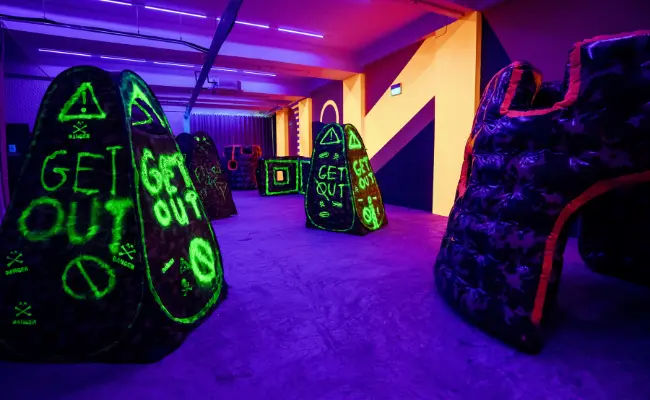
If you’re searching for laser tag venues by location in Singapore, you’re already past the “is this fun?” stage.
You’re trying to solve a practical question:
Where can laser tag actually work for my group, my timing, and my objective?
As operators on the ground, we see this decision play out daily. The postcode matters, but not in the way most people expect. What changes the experience isn’t just where the venue is. It’s how the space is used, how games are run, and whether the format fits your group.
This guide looks at laser tag in Singapore across common search areas — central, east, north, and flexible setups — through a planning lens rather than a listing lens. If you’re comparing operators overall rather than locations, our laser tag Singapore overview breaks down formats and reliability across different group sizes.
Bottom Line Up Front
Location influences convenience.
Format determines scale.
Facilitation decides whether the game flows or falls apart.
Central areas trade space for accessibility.
Fringe locations allow longer, more controlled play.
Mobile laser tag removes location as a constraint entirely.
Choosing who runs the game often matters more than the address.
If proximity is your main filter, start with our find laser tag near you guide. If outcomes matter more, read on.
Central Singapore: Easy to Reach, Tight on Space
Areas like Dhoby Ghaut and Orchard dominate searches because they’re MRT-friendly and familiar. Most laser tag options here are mall-based and fully indoor.
What central venues are good at
- Quick, walk-in style sessions
- First-time players testing the game
- Small birthday groups
- Short play windows with minimal setup
Where limitations show up
- Fixed layouts restrict game variety
- Larger groups rotate slowly
- Strategy-heavy formats don’t translate well
- Session length is usually capped
From an operator’s standpoint, these venues work best when expectations are set correctly. If your goal is convenience and a fast hit of fun, central locations deliver. If you’re planning a full team bonding session or school programme, the space becomes a bottleneck very quickly.
This is why organisers often choose nearby event spaces or mobile setups instead of forcing larger groups into a mall environment.
Kallang and City Fringe Areas: Built for Structured Play
.webp)
Kallang consistently appears in venue searches because it sits between central Singapore and the east, with MRT access and sports-oriented infrastructure.
Unlike malls, fringe areas like Kallang support event-style laser tag rather than casual drop-ins.
What works well here
- Corporate team sessions
- School and youth programmes
- Large birthday groups
- Brand or product events
The advantage isn’t the postcode — it’s the availability of space. Larger venues allow proper safety briefings, clearer team allocation, and controlled pacing between rounds.
Indoor and outdoor flexibility
In areas like Kallang, both indoor and outdoor laser tag formats are viable. This allows:
- Longer total playtime
- Multiple game modes
- Clear transitions between rounds
- Add-ons like sound systems and team announcements
From experience, this is where laser tag becomes a managed experience instead of a rushed activity.
East Singapore: Family-Friendly, Needs Structure
Searches around Tampines and the surrounding east tend to come from families, schools, and neighbourhood groups.
Venues here are often designed with younger players in mind.
Typical characteristics
- Kid-friendly layouts
- Weekend-focused availability
- Shorter rounds by default
- Casual group flow
Managing mixed-age groups
When kids and adults play together, facilitation becomes critical. Without it, games turn chaotic fast.
East-side sessions perform best when:
- Rules are simplified clearly
- Game pacing is actively managed
- Facilitators reset expectations between rounds
If budget is part of your decision, it’s worth reviewing value-focused laser tag options before committing to a specific venue.
North Singapore: Community Spaces Over Fixed Arenas
Searches in the north often centre around community hubs and malls rather than permanent laser tag arenas.
What this means in practice
- Small to medium groups fit comfortably
- Indoor-only options are common
- Larger groups quickly outgrow fixed venues
For bigger sessions, organisers usually shift to:
- Community halls
- School sports halls
- Multi-purpose venues near residential areas
This is where mobile laser tag becomes the practical solution, offering longer playtime and better group control.
Mobile Laser Tag: When Location Stops Being the Limiting Factor
.webp)
One of the most common misconceptions is that laser tag must happen inside a permanent arena.
In reality, mobile laser tag runs across Singapore every week.
Why mobile formats work
- Venue choice becomes logistical, not restrictive
- Group sizes scale more easily
- Session length is adjustable
- Game objectives can match event goals
Mobile setups are regularly used for:
- Corporate team building
- School orientations and camps
- Company celebrations
- Large birthday events
- Brand activations
Because the operator controls equipment, safety zoning, and game flow, the experience adapts to the space instead of fighting it.
Facilitated Laser Tag at Dedicated Event Spaces
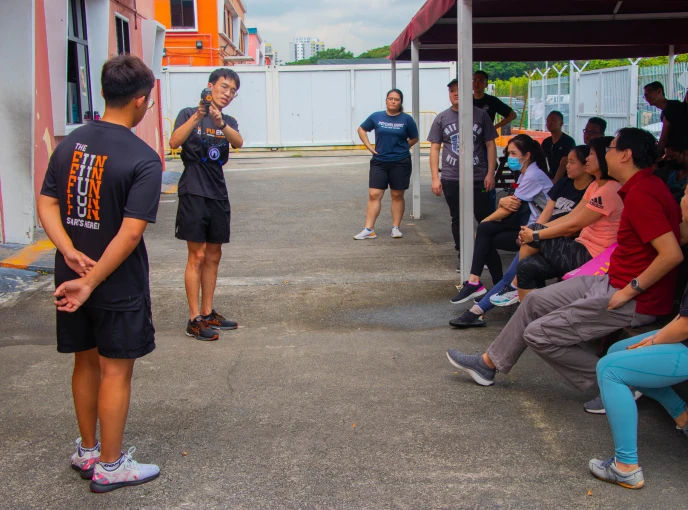
Many organisers specifically look for providers who don’t rely on fixed arenas.
At dedicated event spaces and HQ-style venues, laser tag is run with full facilitation, including:
- Structured safety briefings
- Equipment management
- Team balancing
- Smooth transitions between games
The emphasis isn’t flashy décor. It’s consistency, engagement, and reliability — especially important for mixed-age groups and corporate bookings.
Packages, Formats, and Why They Matter
Professional operators don’t sell “one-size-fits-all” laser tag.
Formats vary depending on:
- Group energy level
- Age range
- Time available
- Event objective
Common structures include standard sessions, themed formats, and mission-based gameplay. What matters most is that the format matches the group, not the venue’s marketing.
From experience, tailored packages reduce downtime, confusion, and safety issues — especially for first-time organisers.
Facilities That Quietly Make or Break the Session
When comparing locations, organisers often focus on photos and miss operational details that affect the experience.
Practical factors to look out for:
- Clear briefing and staging areas
- Safe equipment storage
- Ventilation and rest zones
- Sound systems for instructions
- Shower access for longer sessions
These don’t show up on listings, but they heavily influence how smooth the session feels — especially for large groups.
How Operators Adapt Laser Tag to Different Spaces
The same equipment can feel completely different depending on how it’s deployed.
Experienced operators adjust for:
- Ceiling height and sightlines
- Lighting conditions
- Crowd flow between rounds
- Safety buffers for high-movement zones
Compact indoor spaces call for shorter rounds and simpler objectives. Larger venues allow wider movement, strategic missions, and elimination-style formats.
Good operators adapt the game. Poor ones force a fixed layout everywhere.
Matching Location to Event Type
Different goals suit different environments.
- Team building benefits from venues that allow longer sessions and clear briefing zones
- Birthday parties prioritise convenience for small groups, but scale better with mobile setups for larger celebrations
- Product launches and activations need flexible spaces with staging, sound, and lighting control
Across all scenarios, success comes down to execution, not the street name.
Planning Laser Tag Starting From Location
Most people begin with “what’s near me.” That’s normal.
What’s often missed is that the quality of the laser tag experience depends more on facilitation than geography.
If ease of travel is your priority, choose a nearby venue.
If engagement, pacing, and safety matter, focus on who’s running the game.
You can explore nearby options using our laser tag near your location guide or head back to the main laser tag Singapore page to compare formats and setups.
Common Questions About Laser Tag Venues
How do I choose between different laser tag venues locations Singapore?
When comparing laser tag venues locations Singapore, start by thinking about how you want to play laser tag, not just where. Central places prioritise accessibility, while larger event spaces allow longer laser tag sessions, more laser tag game modes, and smoother pacing. A good laser tag provider will advise based on group size, duration, and experience level rather than pushing a fixed venue.
Is Kallang a good area for hosting a laser tag event?
Yes. Areas around Kallang Leisure Park, Kallang Wave Mall, and setups like Kallang Cage are commonly used for organised laser tag event formats. These places are popular for team building events, large birthday groups, and structured play because they support clearer safety zones, equipment setup, and professional facilitation.
What is Kallang Cage typically used for in laser tag?
Kallang Cage is usually used as a flexible setup location rather than a permanent arena. When paired with proper laser tag facilitators, it works well for larger groups, temporary layouts, and customised laser tag missions. The experience depends more on the operator than the venue itself.
What facilities should I check before booking a laser tag venue?
Beyond location, check for practical amenities such as briefing areas, ventilation, rest zones, and shower facilities if your session runs long. Access to a sound system, storage room, and staging space improves flow, especially when managing many players or guests.
Are laser tag packages different from one another?
Yes. Laser tag packages vary by duration, group size, game structure, and facilitation level. A standard laser tag package may focus on free-play rounds, while others include themed laser tag games, structured objectives, or mission-based formats. Choosing the right package matters more than choosing a flashy venue.
What is included in a neon laser tag package?
A neon laser tag package usually focuses on lighting, atmosphere, and faster-paced gameplay. While the visuals stand out, it still includes the same essentials: safety briefings, managed laser guns, clear rules, and facilitated laser tag game modes.
Can laser tag be used for a birthday party or casual gathering?
Yes. Laser tag works well for a birthday party, whether it’s kids, teens, or adults. Smaller groups of friends often prefer short, energetic rounds, while larger parties benefit from structured laser tag sessions that reduce waiting time and confusion for guests.
Is laser tag suitable for corporate team building events?
Laser tag is commonly used for team building events because it naturally encourages communication, coordination, and problem-solving. When run as a structured team building event, facilitators guide gameplay so victory depends on teamwork rather than speed alone.
Do laser tag games require prior experience?
No. Most laser tag games are designed so any player can jump in quickly. Good facilitators explain rules clearly, manage pacing, and adapt the laser tag game to the group’s comfort level.
What role do laser tag facilitators play?
Laser tag facilitators handle safety briefings, equipment checks, team allocation, and game transitions. Their role is critical in keeping the session smooth, fair, and enjoyable — especially for large groups, mixed ages, or first-time players.
Can laser tag be played outside of a permanent arena?
Yes. Many laser tag providers run mobile setups at halls, futsal courts, schools, and multipurpose rooms. This flexibility allows organisers to choose locations based on convenience while still running a professional laser tag event.
What equipment is typically used in a professional setup?
Professional sessions include calibrated laser tag equipment, responsive laser guns, scoring systems, and backup gear. Operators also manage charging, resets, and sensor checks to ensure consistent performance across multiple laser tag sessions.
Are laser tag missions different from normal games?
Yes. Laser tag missions introduce objectives such as zone control, elimination, or capture-style gameplay. These formats add strategy and are commonly used in longer sessions, corporate programmes, or competitive group activities.
Can laser tag be part of a larger event programme?
Absolutely. Laser tag is often combined with other activities in an event schedule, whether for corporate programmes, parties, or community gatherings. This works well when venues have sufficient space, clear flow, and supporting features.
Does the venue affect how long we can play?
It can. Fixed venues may cap session length, while mobile setups allow more flexibility. This is why many organisers choose adaptable spaces when planning for your group’s timing, group size, and energy level.
Is laser tag suitable for all age groups?
Yes, when facilitated properly. Rules, pacing, and game design can be adjusted so kids, teens, and adults all enjoy the experience. This inclusivity is why laser tag remains one of the most versatile group things to do together.
Why does execution matter more than the venue itself?
Two identical venues can deliver completely different outcomes depending on facilitation, planning, and equipment use. The best results come when the laser tag provider adapts gameplay to the environment instead of forcing a rigid setup.
Where can I learn more about choosing the right setup?
This article focuses on location and planning considerations. If you’re still comparing formats, group suitability, or session types, explore related guides or speak directly with a provider who understands how laser tag works across different venues and event goals.