
.webp)
Most people walk into a laser tag arena focused on scoring points, tagging opponents, and having fun. Very few stop to think about where the game came from, why it feels so intuitive, or how it evolved into one of the most reliable group activities around.
If you are a casual first-timer, a parent planning birthday parties, or a full-on laser tag junkie who wants to know more than just how to win, understanding the background adds a new layer to the experience. These laser tag fun facts explain why the game feels safe, exciting, and repeatable for such a wide range of players.
Instead of listing trivia, this article looks at facts about laser tag through the lens of experience. How did design decisions shape modern laser tag arenas? Why do laser tag systems work so well for kids and adults? And how did a sci fi concept turn into a real-world activity that still holds up today?
If you are completely new, it helps to first understand what happens during a typical session and how laser tag games are structured before going deeper.
The Science Fiction Roots People Still Recognise
Long before laser tag was a real activity, the idea existed in popular culture. Many of the earliest inspirations came from sci fi series that replaced bullets with beams of light.
Shows like Star Trek introduced the idea of handheld energy weapons, most famously the Star Trek phaser. Around the same time, Star Wars reinforced the concept with glowing blasters and futuristic combat. These stories shaped how people imagined non-lethal, fast-paced battles.
This is where the name laser tag comes from. The name laser tag was never meant to be technical. It was chosen because it sounded futuristic and instantly understandable. The same goes for terms like laser guns, phasers, photon blasters, and even laser stun guns. None of these involve real lasers, but the language helped the idea feel exciting rather than dangerous.
The Practical Influence Behind the Game Design
While sci fi provided the imagination, real-world technology influenced the structure.
Decades ago, military groups explored ways to practise movement and aim without using live ammunition. These systems were used as a training method or military training tool, allowing soldiers to simulate combat scenarios safely. Infrared signals were often used to register hits during combat training exercises.
Laser tag did not come directly from the military, and it was never intended for military you or soldiers as a replacement for combat drills. However, the concept of registering a hit using light rather than physical contact carried over.
This is an important fact that often gets misunderstood. Laser tag is a game designed for entertainment. It removed stress, danger, and intensity while keeping teamwork, awareness, and decision-making.
Early Commercial Laser Tag and the Outdoor Era
The first commercial laser tag systems appeared in the late 1970s and early 1980s. Many of these early setups were played outdoors, using large, heavy equipment.
At the time, the technology was basic. Laser tag equipment was bulky, accuracy varied, and rules were inconsistent. Players might hear terms like photon or gun thrown around loosely, even though the systems were not firing anything physical.
There was no single inventor or defining moment. Several companies developed their own laser tag system ideas independently, refining sensors, scoring, and feedback over time. These early experiments laid the foundation for what laser tag has become today.
Why Indoor Laser Tag Changed the Experience
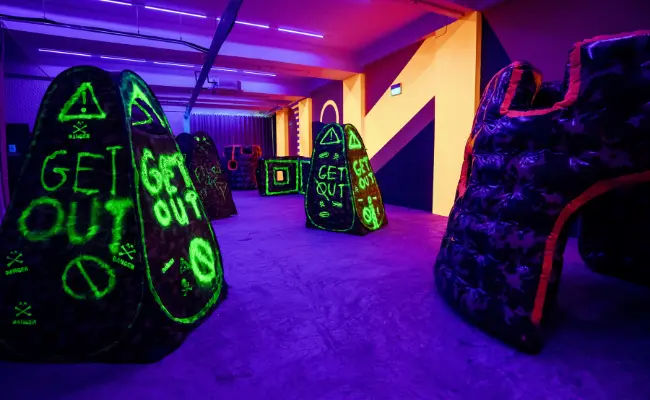
The biggest turning point in laser tag history was the move indoors.
Purpose-built laser tag arenas allowed organisers to control lighting, sound, and layout. This solved many issues outdoor setups struggled with. Sensors worked more reliably, rules were easier to enforce, and player flow became predictable.
From an operational perspective, indoor environments made laser tag suitable for larger groups. Sessions could be rotated smoothly, which is why laser tag became popular for birthday parties, schools, and corporate events.
Indoor arenas are also why laser tag is one of the most accessible group activities today. Weather no longer matters, safety standards are clearer, and gameplay feels consistent across sessions.
Clearing Up the Biggest Misconception
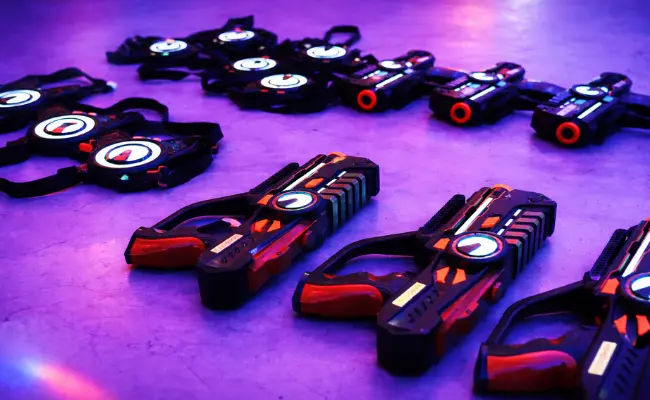
One of the most common laser tag fun facts surprises first-time players: there are no lasers.
Despite the name laser tag, laser tag uses infrared technology, similar to what you find in everyday electronics. There are no visible beams, no harmful radiation, and no physical projectiles.
This fact explains why laser tag works so well for kids and mixed-age groups. The design intentionally avoids physical contact. Laser guns, photon blasters, and similar equipment are built for repeated public use and comfort.
Understanding that there are no lasers involved reassures parents and organisers, especially those booking activities for younger players.
How Gameplay Became More Strategic Over Time
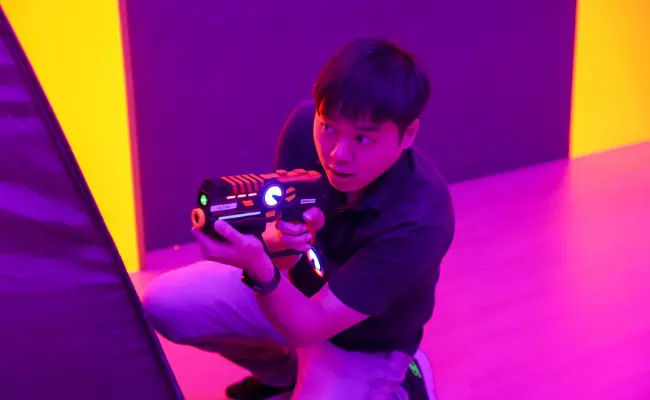
Early laser tag games focused on simple hit counts. Tag more opponents than you get tagged yourself.
As systems improved, designers introduced objectives, team roles, and mission-based formats. Modern laser tag games now reward communication and coordination as much as speed.
Some formats encourage aggressive movement, while others favour defence or teamwork. This flexibility is one reason laser tag has remained relevant for decades.
In some regions, organised leagues and laser tag championships even exist. These laser tag competition formats treat the game as a structured sport, complete with rankings and tournaments. At the same time, casual players can still enjoy relaxed sessions without pressure.
Why Laser Tag Still Works Today
.webp)
Laser tag remains popular because it offers something digital games cannot: physical interaction and shared experience.
From what we see running sessions, groups enjoy the balance. The game is competitive but friendly, active but safe. Players disconnect from screens and engage with each other in real time.
Laser tag is commonly chosen for:
- Corporate team sessions
- School programmes for kids
- Social gatherings and birthday parties
Its ability to scale from small groups to large events keeps it relevant. Laser tag has proven adaptable across generations, cultures, and group types.
Looking at the facts, its success comes down to design choices made early on: no physical contact, clear rules, and flexible formats.
Final Perspective
Looking at these fun facts, it becomes clear why laser tag has lasted. What started as a sci fi inspired idea shaped by training technology evolved into a safe, engaging group activity.
Laser tag is a game built on smart design rather than novelty. Its adaptability, clear rules, and inclusive equipment explain why players keep coming back.
If history has sparked your interest, the next step is improving how you play. Exploring practical laser tag tips can help you make better decisions and enjoy your next session even more.
Common Questions and Quick Facts About Laser Tag
Is laser tag dangerous?
No. Laser tag equipment does not emit harmful light. There are no lasers involved, and the systems are designed for safe play.
Why is it called laser tag if laser tag uses infrared?
The name laser tag was chosen for its futuristic appeal, not technical accuracy.
Was laser tag created as a military training tool?
Laser tag itself was designed for entertainment. While similar systems were used as a training tool by military groups, the game removed combat intensity.
Are laser tag championships a real thing?
Yes. Some regions run organised laser tag championships and competitive leagues alongside casual play.
What makes laser tag fun for repeat sessions?
Varied objectives, team formats, and the social aspect keep the experience fresh.