
.webp)
Most organisers don’t start by asking what is the most intense shooting game they can book.
In real life, the decision is more practical: you can choose something exciting and the experience still has to work for a mixed team, on schedule, without drama.
That’s why the comparison usually becomes paintball vs laser tag in Singapore. Both are competitive sports, both promise a high-energy battle, and both look appealing at first glance. But once teams step onto the playing field, the difference becomes clear.
This guide looks at how paintball and laser tag actually perform as team building activities, based on real participation patterns, planning realities, and outcomes — not surface-level hype.
First Impressions Shape the Entire Game

Before anyone fires a shot, behaviour is already forming.
With paintball games, excitement splits fast. There’s a loyal fan base — often experienced paintball players or even paintball pros — who enjoy realism and impact. On the other hand, first-timers hesitate. They ask about pain, mess, and whether they’ll be eliminated early of the game.
A laser tag experience begins differently. Because there’s no physical impact, most participants are willing to play immediately. That confidence shift means more people step in as active players, not observers waiting on the sidelines.
Safety Is More Than Rules — It’s Confidence
In paintball, pellets hit at speed. Even with protective gear, discomfort is expected. In paintball, that physical risk changes how people move. Players hide more, take fewer risks, and once hit, often disengage.
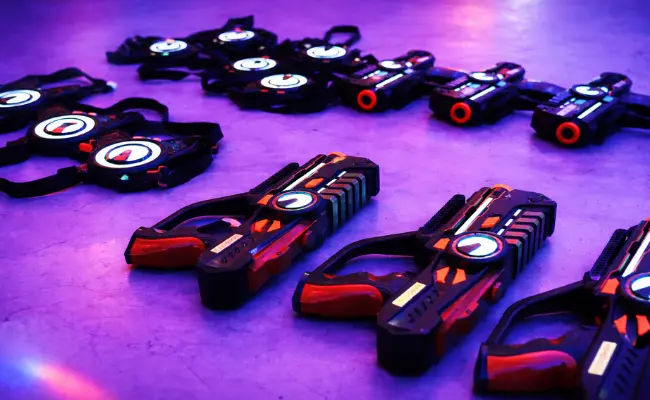
A laser tag game uses infrared lasers and sensors. Laser tag guns register hits electronically, removing physical pain from the equation. Modern laser tag equipment keeps intensity high while allowing players to focus on movement, teamwork, and decision making instead of self-protection.
That confidence gap directly affects engagement and communication.
Engagement Over Time, Not Just the First Hit
Early momentum matters, but sustained engagement matters more.
In many paintball games, early eliminations are common. Once hit, players may be out for long stretches. Over time, the number of active participants shrinks, energy drops, and disengagement spreads.
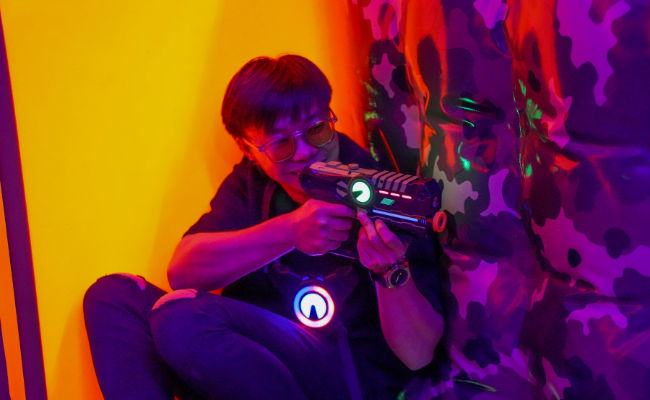
Laser tag games, by contrast, are designed to keep people involved. Respawns, rotating objectives, and timed rounds ensure players return quickly. Whether coordinating laser tag missions, tracking an opponent, or pushing for points, every round feels like a reset.
How Team Size Changes the Laser Tag vs Paintball Decision
Team size amplifies these differences.
Paintball performs best with small, tightly matched groups. As groups grow, downtime increases. Safety briefings take longer, rotations slow down, and players spend more time waiting than participating.
A laser tag experience scales more smoothly. Larger teams can be divided into rotating squads without long idle periods. Because re-entry is fast, energy stays consistent even as group size increases.
For organisers managing medium to large teams, that predictability is critical.
How Objectives Shape Behaviour During the Game

Objectives drive behaviour more than people expect.
In many paintball formats, survival becomes the primary goal. Players hold positions, avoid exposure, and react defensively. Communication happens, but it’s often situational.
A laser tag game can be structured around clear objectives. Purpose-built laser tag missions encourage planning before the round begins. Teams assign roles, choose routes, and adapt tactics mid-game based on live scoring.
This creates clearer collaboration signals and more visible teamwork outcomes.
Indoor Control vs Outdoor Variables
Paintball is typically outdoors. Weather affects comfort, pacing, and fairness. Rain alters terrain, heat drains energy, and the playing field changes throughout the session.
Laser tag can be hosted indoors in climate-controlled venues. That stability keeps timing predictable, rules consistent, and execution smooth — regardless of external conditions.
Compared to activities like go karting, which still isolate participants once the race starts, laser tag maintains interaction throughout the experience.
Equipment Design and How It Affects Player Behaviour
Equipment subtly shapes how people move.
Paintball markers are heavier, recoil-based, and less forgiving during motion. This encourages slower movement and defensive play, especially among newer participants.
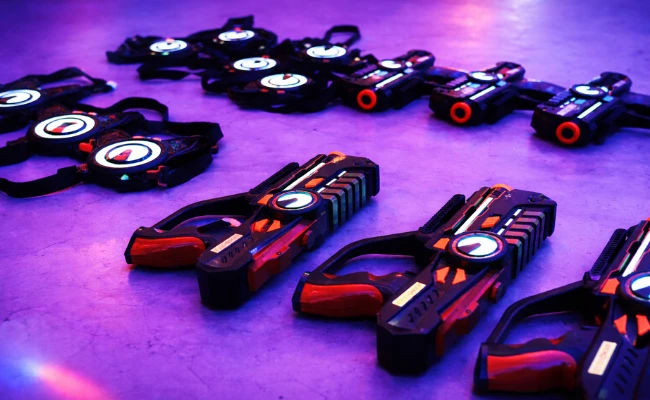
Laser tag guns are lighter and built for mobility. Because hits are sensor-based, players move freely, reposition often, and collaborate actively. Modern laser tag equipment provides instant feedback, keeping players mentally engaged even after being tagged.
That responsiveness keeps focus on teamwork rather than mechanics.
Learning Curve and Early Momentum
Paintball requires extended onboarding. Even after briefings, some players remain cautious.
Laser tag onboarding is intuitive. Most groups understand how the system works within minutes, which means energy peaks early rather than halfway through the event.
That fast start matters when time is limited.
Fair Competition and Clear Outcomes
Fairness determines whether competition feels motivating or discouraging.
In paintball, physical dominance often decides outcomes. Faster or more aggressive individuals gain an edge.
Laser tag shifts outcomes toward coordination. Teams that communicate and plan outperform those that rush blindly. There’s a clear winner, and teams understand why they won — collaboration, not brute force.
Comparing Laser Tag, Paintball, and Other Competitive Activities

Organisers often compare laser tag and paintball alongside other competitive sports.
Paintball offers realism but limits participation. Go karting delivers speed but isolates participants during play.
Laser tag sits in between. It delivers combat scenarios while keeping everyone interacting. Players aren’t racing alone — they’re communicating, adapting, and responding together.
That balance makes laser tag more versatile for team-based outcomes.
Psychological Safety Changes Everything
Paintball introduces fear — of pain, embarrassment, or being targeted. For some, that adrenaline is appealing. For many, it’s a barrier.
Laser tag removes pain while preserving intensity. Players take risks, experiment with tactics, and engage freely. That psychological comfort supports interaction across departments and seniority levels.
What Happens After the Game Ends

Post-game dynamics matter.
After paintball, feedback often splits. Enthusiasts loved it. Others mention discomfort or downtime.
After a laser tag experience, teams discuss strategy, turning points, and close calls. Those conversations extend engagement beyond the session itself and reinforce shared memory.
When Paintball Still Makes Sense
Paintball still works for a specific audience.
It’s suitable if your group:
- Actively enjoys airsoft or paintball
- Wants physical intensity as the main objective
- Is small and relatively homogeneous
For that fan base, paintball delivers exactly what they expect.
Why Laser Tag Fits More Organisational Contexts
Laser tag offers flexibility paintball doesn’t.
It can be adapted across age groups, fitness levels, and time constraints. That adaptability makes it suitable for organisations prioritising inclusivity, reliability, and smooth execution.
So What’s the Smarter Choice?
Choosing between paintball vs laser tag isn’t about toughness. It’s about who participates, how long engagement lasts, and how smoothly the event runs.
For most teams, laser tag delivers stronger results without unnecessary risk.
Final Takeaway for Organisers
The best activity isn’t the one that looks extreme — it’s the one your whole team enjoys.
Laser tag balances intensity with accessibility, strategy with action, and excitement with control. If you’re deciding about the right format for your next event, clarity comes from matching the activity to the group you’re actually planning for — not an idealised version of them.
FAQs: Laser Tag vs Paintball for Team Building
What is the main difference between laser tag and paintball for team building activities?
The biggest difference is how people experience the game. In paintball, physical impact is part of the challenge, which can limit participation. A laser tag game removes pain while keeping the competitive battle feel, making it easier for everyone to stay involved throughout the session.
Is laser tag suitable for mixed-age or mixed-fitness teams?
Yes. Laser tag can be adapted for different ages, fitness levels, and comfort zones. Because it relies more on movement, communication, and awareness than strength, it’s often suitable for teams that include seniors, juniors, or first-time players.
How does laser tag compare to paintball and airsoft?
Paintball and airsoft appeal strongly to a specific fan base that enjoys physical realism. Laser tag, on the other hand, focuses on strategy and teamwork without physical impact. That makes it more practical for corporate groups where inclusivity and safety matter.
Do laser tag games still feel competitive without physical contact?
Yes. Modern laser tag games are designed around scoring, objectives, and laser tag missions that reward teamwork and smart decision making. Players still compete to outmanoeuvre an opponent, control zones, and emerge as the winner — just without bruises.
What role does equipment play in the laser tag experience?
Equipment design has a big impact. Lightweight laser tag guns and responsive laser tag equipment allow players to move freely and react quickly. Because hits are registered electronically using lasers, gameplay stays fast-paced and engaging.
Is laser tag better than paintball for large groups?
For most large groups, yes. Laser tag scales more smoothly because players can respawn and rotate quickly. In paintball games, downtime increases as group size grows, which can reduce engagement for part of the team.
How does laser tag compare to other competitive sports like go karting?
Activities like go karting deliver individual excitement, but interaction drops once the race starts. Laser tag keeps communication active throughout the session, making it more effective for team building activities where collaboration is the goal.
Can kids or families participate in laser tag?
Yes. Laser tag can be adjusted for younger players and family groups. That flexibility makes it suitable beyond corporate events, unlike paintball, which has stricter age and safety limitations.
Will laser tag still feel intense for competitive teams?
Absolutely. Well-designed combat scenarios, timed objectives, and team-based scoring ensure the experience remains challenging. Competitive teams often enjoy laser tag because outcomes depend on coordination rather than just physical dominance.
When does paintball make more sense than laser tag?
Paintball works best when the group already enjoys paintball or airsoft-style play and actively wants physical intensity. For that specific fan base, paintball delivers what they’re looking for. For most mixed teams, laser tag is the safer and more consistent option.