
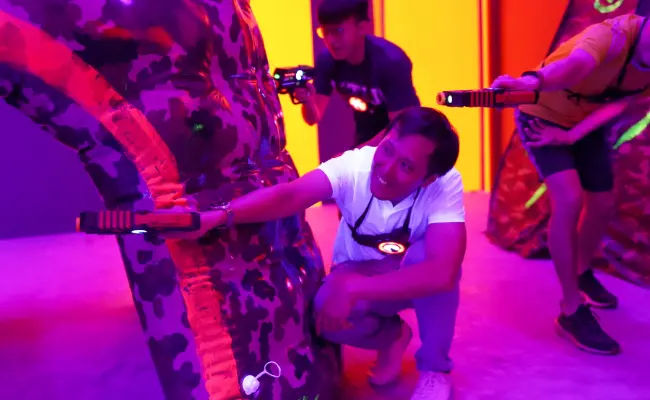
If you’re planning cohesion activities Singapore units can rely on, the challenge usually isn’t ideas — it’s execution.
Unlike casual team building activities, NS cohesion planning involves government agencies, structured hierarchies, and a wide range of personalities and physical capabilities. A session that works well for one group can easily fall apart when scaled up or rushed.
Most organisers reach this point with similar concerns:
- Will this actually strengthen relationships within your team, or just fill time?
- Can team members of different fitness levels contribute equally?
- Will the activity run smoothly without constant intervention?
- Does the experience support cooperation, discipline, and leadership?
A good cohesion plan doesn’t try to impress. It focuses on whether people leave the event more comfortable working with each other than before.
This guide breaks down how to choose cohesion events that work in practice — and why structured laser tag in Singapore has become a dependable team building experience for NS units and other structured organisations.
How Cohesion Should Feel for NS Units
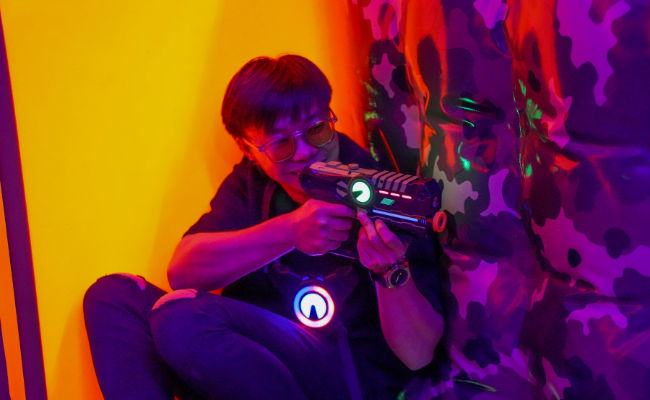
A strong cohesion experience is not about defeating the most opponents.
It’s about whether a team learns to operate more confidently together.
From delivering team building experiences across SAF units, schools, and corporate clients — including projects involving Fortune 500 organisations — effective cohesion formats tend to prioritise the same fundamentals:
- Clear objectives that everyone understands
- Simple mechanics that are for all, not just the most athletic
- Built-in cooperation instead of isolated competition
- Consistent facilitation to maintain structure
- A pace that keeps engagement high without exhaustion
When these are missing, even well-intended bonding activities become fragmented. Some participants disengage, others dominate, and organisers spend the session troubleshooting instead of observing team bonding.
Why Laser Tag Works as an NS Cohesion Solution
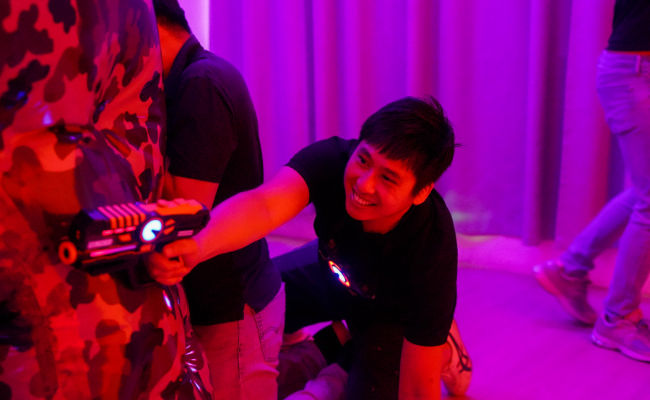
Laser tag succeeds as a team building activity because it’s structured by design.
Rather than free-for-all play, a professionally run session focuses on coordination, communication, and shared goals — the same traits NS units rely on operationally.
Objective-Driven Gameplay
Teams complete missions that require coordination, positioning, and timing. Success depends on cooperation, not individual skill.
Flexible Roles
Participants choose how intensely they want to play. Some lead movement, others support strategy or communication. Everyone contributes with your team, regardless of fitness level.
Time-Controlled Rounds
Short rounds keep energy up while preventing burnout. This also allows facilitators to reset expectations and maintain discipline between games.
Clear Command Flow
Briefings, rules, and transitions are handled cleanly, which helps participants stay focused while still enjoying the experience.
Because laser tag is non-contact, it’s accessible for the full range of NSFs and NSmen. That inclusivity is a key reason it works as a team building event for mixed groups.
Managing Scale Without Losing Control
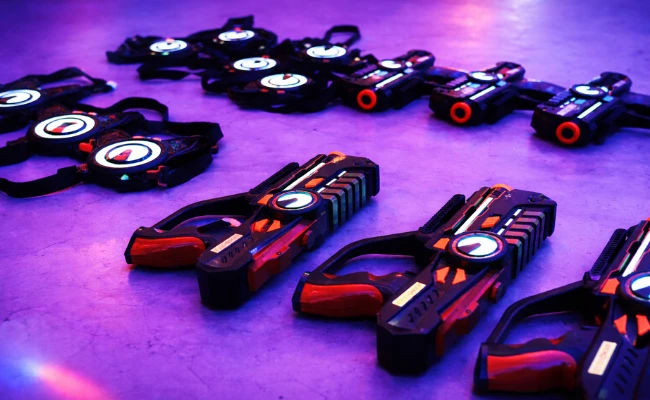
One of the hardest parts of NS cohesion planning is scale.
Many bonding activities sound good until numbers increase. Laser tag sessions designed for unit-level cohesion events typically handle this through:
- Structured rotations so everyone stays active
- Multiple facilitators to ensure consistency
- Clear schedules that reduce waiting time
- Central coordination across game sets
This allows organisers to focus on outcomes instead of crowd control.
Group Size & Cost
Suitable for 20 to 100+ participants.
Sessions typically start from $25 per pax, depending on duration and setup.
Safety, Discipline, and Trust
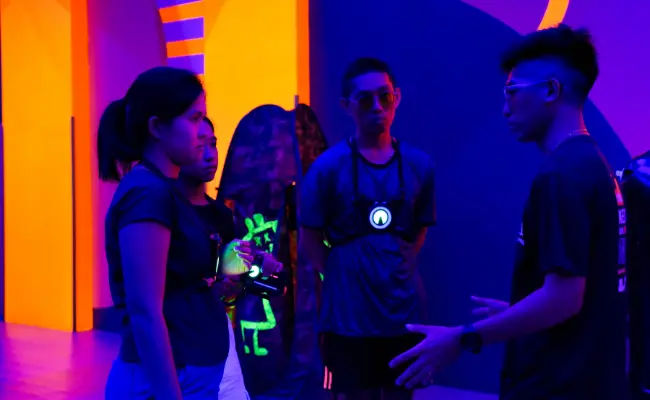
For NS cohesion, safety is a non-negotiable.
Professional laser tag sessions are built around control:
- Non-contact gameplay reduces injury risk
- Safety briefings establish expectations early
- Defined zones prevent confusion
- Facilitators actively manage behaviour and flow
When the structure mirrors familiar NS systems, participants feel more at ease. That sense of order supports stronger team bonding and better engagement throughout the experience.
Indoor vs Outdoor Laser Tag Venues
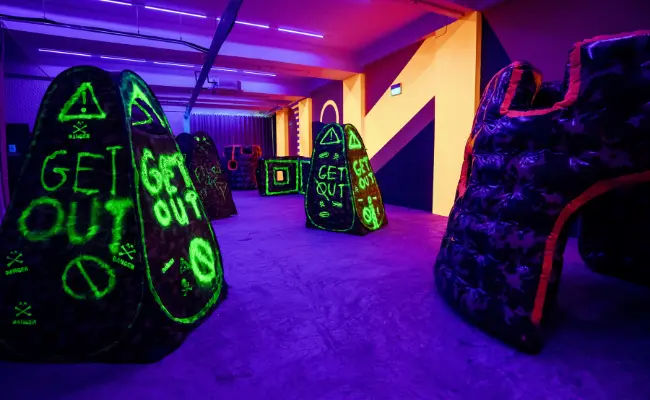
Choosing the right venue matters more than novelty.
Indoor Setups
Often preferred because they offer:
- Air-conditioned comfort
- Predictable conditions
- Better sound and crowd management
- No weather disruption
Sheltered Outdoor Options
Viable in approved locations, but require tighter scheduling and contingency planning.
The best choice depends on objectives, timing, and group size — not just aesthetics.
How Laser Tag Compares With Other Team Building Options
Organisers often consider alternatives such as:
- Archery Tag – More physically demanding, less inclusive
- Escape Rooms – Strong for problem-solving, limited scalability
- Art Jamming – Relaxed, but lower urgency and energy
- Workshop formats – Great for learning, weaker for bonding under pressure
Laser tag sits between these options. It offers structure, competition, and cooperation without excluding participants. That balance makes it perfect for NS units that need reliability.
What to Look For When Planning Cohesion Activities
Before committing to any team building experience, check whether it:
- Allows team members to rely on each other
- Scales cleanly for your unit size
- Encourages leadership without forcing hierarchy
- Builds trust through shared challenges
- Strengthens relationships, not just excitement
If you can confidently say “yes” to these, you’re closer to a solution that works.
How Cohesion Activities Shape Leadership and Decision-Making
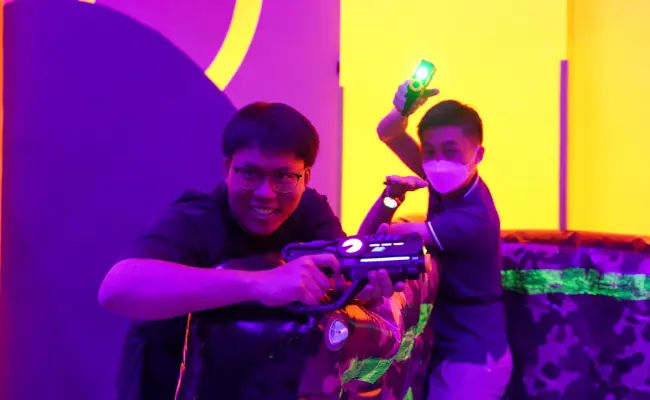
One overlooked benefit of well-designed cohesion activities is how clearly they surface leadership dynamics.
In NS units, leadership isn’t always about rank during bonding sessions. A good team building activity creates situations where different team members step forward naturally — whether through communication, tactical thinking, or calming others under pressure.
During structured laser tag sessions, leadership often emerges in small but meaningful ways:
- Someone coordinates movement without being asked
- Another member keeps morale up after a lost round
- A quieter participant becomes the most reliable communicator
Because the environment is controlled and low-risk, your team can experiment with decision-making styles without fear of failure. That makes the experience especially valuable for developing confidence and mutual trust.
Unlike a lecture-style workshop, this kind of learning happens organically. Participants don’t feel like they’re being assessed, yet they walk away with clearer insight into how they work with your team and how leadership can rotate depending on the situation.
Over time, these moments strengthen internal relationships and improve cooperation during actual operations.
Not all bonding activities create real bonds.
Casual activities can be enjoyable, but they don’t always translate into improved teamwork. What makes a cohesion experience effective is shared pressure — not stress, but a sense of collective challenge.
Laser tag creates this through:
- Time-bound objectives
- Clear win/lose conditions
- Reliance on each other to succeed
When team members realise they can’t progress alone, behaviour shifts. Communication becomes clearer. Blame reduces. Support increases.
This is where team bonding happens.
Because the pressure is playful and non-threatening, the experience feels safe for all, including those who may not usually enjoy competitive settings. The result is a team building event that strengthens trust without alienating participants.
From an organiser’s perspective, this makes laser tag a solution that balances energy with inclusivity — a rare combination among many team building experiences.
Adapting Cohesion Events for Different Unit Profiles
No two NS units are identical.
Some groups are tightly bonded but fatigued. Others are newly formed and still finding rhythm. The best cohesion events adapt to the group, not the other way around.
Professionally facilitated laser tag sessions allow for adjustments such as:
- Lower-intensity formats for recovery-focused units
- Strategy-heavy games for leadership development
- Balanced rotations to mix sub-groups and prevent cliques
This flexibility makes it easier to design a team building experience that fits your objectives, whether you’re working with NSFs, NSmen, or mixed-age members.
It also ensures the event remains inclusive across a wide range of personalities and abilities — something many planners underestimate until it’s too late.
Why Government Agencies Prefer Proven Formats
For government agencies, reliability matters more than novelty.
Cohesion planning often involves approvals, reporting, and accountability. Choosing a proven team building activity reduces risk — both operationally and reputationally.
Laser tag has become a recurring choice not because it’s new, but because it consistently delivers:
- Clear structure
- Measurable engagement
- High participation rates
- Minimal safety concerns
These qualities make it easier to justify internally and repeat across future experiences.
When clients return for the same format, it’s usually because the previous session achieved its goal: stronger team bonding, smoother interaction, and better cooperation back at work.
Extending the Cohesion Experience Beyond the Event
The most effective cohesion sessions don’t end when the game ends.
A well-run team building event creates shared reference points — inside jokes, memorable moments, and stories that resurface later. These moments reinforce bonds long after the event itself.
Simple post-session actions can extend the impact:
- Informal debriefs about what worked
- Recognition of good communication or leadership
- Encouraging reflection on how the experience applies back in camp
You don’t need a formal workshop or presentation. Often, a short conversation is enough to help your team connect the activity to real-world cooperation.
That’s what turns a one-off activity into a lasting team building experience.
Final Thoughts
The most effective cohesion activities Singapore units choose are rarely the flashiest.
They succeed because they create a shared experience, encourage cooperation, and allow members to interact naturally under light pressure. When done well, those moments translate into stronger bonds back in camp.
From extensive on-ground delivery across different group sizes and experiences, structured laser tag remains a reliable team building event for NS units seeking clarity, control, and meaningful engagement.
If you’re planning an upcoming cohesion session and want to create a format that works with your unit’s expectations, laser tag continues to be a practical, proven option.
Common Questions About NS Cohesion Activities
What activities suit NS units with mixed fitness levels?
Formats that emphasise communication and teamwork over physical output work best. Laser tag is effective because roles vary and no contact is involved.
Can laser tag support large platoon or company events?
Yes. With proper rotation planning and multiple facilitators, sessions can scale smoothly for large units.
Is laser tag appropriate for both NSFs and NSmen?
When run professionally, it’s safe and accessible for mixed-age groups, with clear rules and controlled gameplay.
How does laser tag encourage real bonding?
Teams rely on coordination, trust, and shared objectives. Success comes from working together, which naturally strengthens camaraderie.