
Most people don’t look up laser tag Singapore because they want a definition.
They’re trying to decide whether to play laser tag with their group—and whether it’ll actually work.
.webp)
Usually, the real questions sound more like this:
- Will everyone enjoy the laser tag activity, or only the competitive ones?
- If it’s my first time to play laser tag, will I feel lost?
- Is the laser tag arena safe for kids, adults, and mixed groups?
- If I’m planning a laser tag event, will it be smooth or stressful?
This article breaks down the laser tag experience from the ground up—how the game feels as a player, what organisers should look out for, and why some sessions feel amazing while others fall flat.
Quick Orientation (Before You Scroll Further)
Before diving in, here’s the practical reality most first-timers discover:
- Laser tag is non-contact and uses infrared, not real lasers.
- You don’t need experience or fitness to play laser tag well.
- Most players understand the laser tag game within one short round.
- The quality of the session depends more on structure and facilitation than effects.
- Laser tag works across a wide range of groups—schools, corporates, families, and birthdays.
This is why laser tag remains one of the most booked group activities in Singapore.
What Laser Tag Feels Like as a Player
From inside the game, the laser tag experience feels less like random running and more like a live strategy challenge.
Each player carries a laser tag gun (sometimes called a laser gun or laser gun blaster) and wears sensors that automatically register hits. When you tag each other, the system tracks everything—no arguing, no guesswork.
What matters most isn’t strength. It’s:
- Awareness of the playing field
- Positioning
- Timing
- Decision-making under pressure
That’s why quieter players often do just as well as aggressive ones.
How Laser Tag Games Are Actually Run
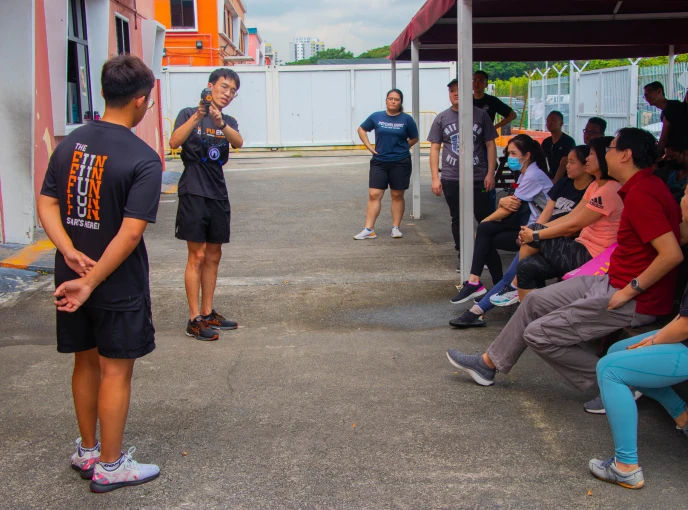
A proper laser tag session is never chaos. It follows a clear flow:
- A short briefing covering safety rules and objectives
- Team allocation (or individual setup)
- A timed round of the game
- Automatic scoring
- Reset, rotate, repeat
This structure is what separates a fun laser tag arena from a confusing one.
If you’re new and want to understand the mechanics—how scoring works, what happens when a player gets tagged, and how different modes operate—this guide on how to play laser tag explains it step by step.
What Happens When a Player Gets Tagged
Depending on the system and format, tagging may:
- Temporarily disable the player
- Reduce points
- Trigger a short respawn delay
This is intentional. It balances the game so confident players don’t dominate beginners and everyone gets meaningful playtime.
Laser Tag Equipment (What Actually Matters)
Laser Guns
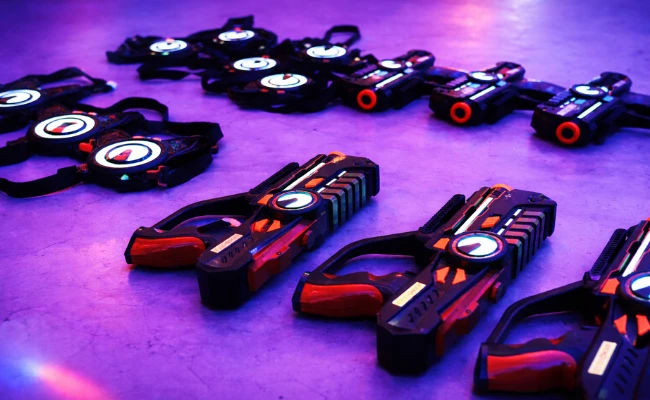
Modern laser guns are lightweight and responsive. Accuracy is less about arm strength and more about awareness and timing.
Whether you’re holding a laser tag gun or a standard laser gun, performance depends on:
- Where you stand
- When you move
- How well you read opponents
Sensors and Vests
Sensors automatically track hits when players tag each other. This keeps laser tag safe and removes disputes—one reason it’s popular for schools and corporate events.
Together, these make up the core laser tag equipment used across most venues.
Atmosphere: Flashing Lights and Fog Machines
Some laser tag arenas use controlled flashing lights or fog machines to create immersion. These elements should enhance gameplay, not reduce visibility or comfort.
Good operators adjust effects depending on the group, especially for younger players or first-timers.
Indoor Laser Tag Arenas vs Event Setups
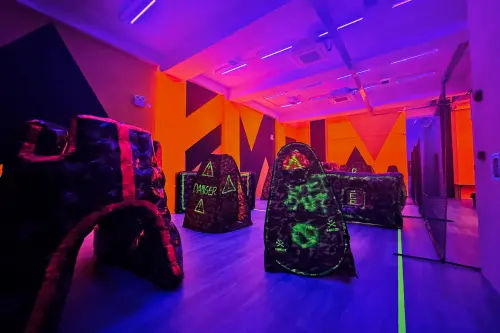
When people search laser tag Singapore, they usually picture an indoor laser tag arena—and that’s the most common format.
Indoor Laser Tag Arenas
Indoor laser tag arenas are popular because:
- Weather isn’t a factor
- Lighting and boundaries are controlled
- Group flow is predictable
They’re ideal for a birthday party, school programmes, and corporate bookings.
Mobile Laser Tag for Events
For large-scale setups, laser tag can also be deployed at venues, halls, or open spaces. These laser tag events require:
- Clear staging zones
- Tight timekeeping
- Extra supervision
When planned properly, they scale well.
Game Formats: Why Structure Changes the Experience
Not all laser tag games feel the same. Format matters.
Tag Team and Team Modes
In tag team formats, players naturally take on roles—attackers, defenders, spotters. This is why laser tag works as a team building activity without forced interaction.
Free-For-All
Everyone plays individually. Fun, but more intense unless pacing is managed.
Objective-Based Missions
These include defend-the-base or capture-style formats. They encourage planning, reduce camping, and highlight teamwork skills.
More thematic formats—such as combat skirmish laser tag or laser quest–style missions—appeal to players who enjoy structure and strategy over pure chasing.
If you want a deeper breakdown of formats used locally, this overview of laser tag games in Singapore explains how each one plays out.
Is Laser Tag Safe?
Yes—when run properly.
Laser tag is non-contact, with no projectiles. Safety comes from:
- Clear safety rules
- Supervision
- Controlled movement zones
Concerns around flashing lights or fog machines can usually be addressed by adjusting intensity.
Who Laser Tag Is Good For
.webp)
Laser tag works because it accommodates different play styles.
- Beginners gain confidence quickly
- Kids enjoy the game-like feel
- Teens enjoy competition
- Adults enjoy strategy
It’s flexible enough for a wide range of participants, making it suitable for families, schools, and corporate teams.
Why Laser Tag Remains Popular in Singapore
Laser tag delivers:
- An adrenaline rush without aggression
- Competition without physical contact
- Social interaction without awkward icebreakers
That balance is why it’s often chosen for team building activities, celebrations, and casual group outings.
Laser Tag for Team Building (What It Really Develops)
Laser tag builds:
- Communication
- Awareness
- Real-time coordination
These teamwork skills emerge naturally during play. With proper structure, laser tag becomes more than just fun—it becomes an effective team building activity.
.webp)
For a deeper look at outcomes, this guide on the benefits of laser tag explains how these behaviours show up during sessions.
Birthday Parties and Celebrations
Laser tag is a popular birthday party choice because it:
- Gives the group a clear main activity
- Keeps energy structured
- Works across different ages
Short rounds, clear rules, and breaks make all the difference.
Practical Checklist Before You Book
When choosing between different places and laser tag arenas, check:
- Scalability for group size
- Beginner accessibility
- Clarity of briefing
- Variety of laser tag games
- Inclusivity in facilitation
Laser Tag Tips for First-Time Players
These aren’t advanced tactics—just simple laser tag tips that help immediately:
- Don’t sprint constantly
- Use cover, then move
- Look up, not just at your laser gun
- Communicate simply
- Pick a role that suits you
More beginner-friendly advice can be found in this guide focused on laser tag tips for first-timers.
Clearing Up Common Myths
.webp)
- Laser tag is only for kids, adults often enjoy it more
- You need to be fit, you don’t
- It’s chaotic, only if poorly run
- Dark arenas are unsafe, structure matters more than brightness
How Different Players Experience the Same Laser Tag Game
One reason laser tag works for so many groups is that the same game feels different to different players.
In a single session, you’ll usually see:
- One player chasing the adrenaline rush
- Another hanging back and reading movement
- Someone focused on protecting teammates
- Someone quietly racking up points through positioning
All of them are technically playing the same laser tag game, but experiencing it differently.
That flexibility is rare in group activities. Most activities reward one personality type. Laser tag doesn’t.
Because the system tracks tags automatically and the playing field is shared, players can contribute without needing to dominate. This is why laser tag and team-based formats work especially well for mixed groups who don’t know each other well.
How Group Size Changes the Laser Tag Experience
Laser tag doesn’t scale automatically. Group size changes everything, including pacing, energy, and enjoyment.
Small Groups (6–12 Players)
Smaller groups feel more tactical. Players:
- Recognise each other quickly
- Adapt strategies faster
- Feel individual decisions more strongly
These sessions often feel intense and personal, especially in compact laser tag arenas.
Medium Groups (12–30 Players)
This is where laser tag shines. You get:
- Enough players for tag team strategies
- Clear roles within teams
- High energy without overcrowding
Most birthday party and corporate bookings fall into this range.
Large Groups (30+ Players)
Large-scale laser tag events require planning:
- Rotations between rounds
- Clear waiting and briefing zones
- Shorter game durations
When done right, large groups still feel engaged. When done poorly, downtime kills momentum.
This is why organisers should always ask how the laser tag session handles rotation, not just how many laser guns are available.
Laser Tag as a Planning Decision (Not Just an Activity)
.webp)
For organisers, laser tag isn’t just about fun. It’s about risk, flow, and predictability.
Compared to many team building activities, laser tag offers:
- Clear start and end points
- Fixed durations
- Low injury risk
- Minimal weather dependence
This makes it attractive for planners who need things to run on time.
If you’re choosing between different places, ask:
- How long is each round?
- How is briefing handled for first-timers?
- What happens if a player doesn’t want to run?
Good answers signal a well-run operation.
Laser Tag vs Other Group Activities
People often compare laser tag to escape rooms, sports days, or obstacle-based activities.
Here’s where laser tag is different:
- Escape rooms reward puzzle-solving but limit physical movement
- Sports games reward fitness and confidence
- Icebreakers reward extroversion
Laser tag rewards awareness and decision-making, which more people can access.
That’s why laser tag works especially well when:
- Participants don’t know each other well
- Energy levels vary
- The group includes different ages or departments
How Laser Tag Builds Teamwork Without Forcing It
One mistake organisers make is expecting the game itself to magically create bonding.
Laser tag builds teamwork skills only when structure supports it.
This happens when:
- Objectives encourage cooperation
- Teams stay consistent across rounds
- Facilitators highlight group wins, not just top scorers
Over time, players start:
- Calling out positions
- Covering each other
- Coordinating pushes
That’s real teamwork—emerging naturally, not instructed.
This is why laser tag is often chosen as a team building activity even by groups that dislike traditional team building activities.
Understanding Competitive vs Casual Laser Tag Sessions
Not every laser tag session should feel competitive.
Some groups want:
- Scores
- Rankings
- Clear winners
Others want:
- Laughter
- Movement
- Shared experience
A good operator adjusts:
- Game modes
- Scoring emphasis
- Round length
For example, competitive formats like combat skirmish laser tag or laser quest–style missions suit confident adult groups. Casual groups benefit more from team-based or objective modes where outcomes feel shared.
If a venue only offers one style of the game, that’s a limitation—not a feature.
Laser Tag for Repeat Players vs First-Timers
First-time players need:
- Simple rules
- Short rounds
- Clear boundaries
Repeat players want:
- Variation
- Tactical depth
- New challenges
The best laser tag arenas offer progression:
- Starting with basic modes
- Introducing objectives later
- Adjusting pacing
This keeps the experience fresh and explains why some groups come back regularly.
What Makes a Laser Tag Arena Feel “Good” (Beyond Visuals)
People often judge a laser tag arena by neon lights or themes. Players remember different things.
They remember:
- Whether rules were clear
- Whether downtime was boring
- Whether they felt useful
Visuals help immersion, but flow matters more.
Flashing lights and fog machines should:
- Support visibility
- Enhance atmosphere
- Never confuse boundaries
When effects interfere with gameplay, the experience drops fast.
Why Laser Tag Is Often Better Indoors in Singapore
Climate matters.
Indoor laser tag arenas avoid:
- Heat fatigue
- Rain disruptions
- Uneven terrain
This makes them easier for:
- Birthday parties
- School groups
- Corporate bookings with fixed schedules
Outdoor or mobile setups work well for special laser tag events, but indoor formats remain the most reliable for consistent play.
Laser Tag for Kids vs Teens vs Adults
Kids
- Shorter rounds
- Clear safety rules
- More supervision
Kids enjoy movement and visuals more than scores.
Teens
- Competition matters
- Strategy becomes important
- Peer dynamics affect play
Teens often respond well to structured missions.
Adults
Adults enjoy laser tag because:
- It feels nostalgic
- It’s strategic
- It doesn’t require peak fitness
Many adults underestimate how fun it is until they play laser tag themselves.
The Role of the Facilitator (Often Overlooked)
The facilitator quietly controls the entire experience.
They:
- Set the tone
- Manage energy
- Prevent frustration
- Adjust difficulty
A strong facilitator turns a good game into a great one. A weak one lets confusion spread.
This is why two sessions using identical laser tag equipment can feel completely different.
Common Mistakes Organisers Make
If you’re planning a laser tag event, avoid these traps:
- Choosing based on photos alone
- Ignoring briefing quality
- Overpacking rounds
- Underestimating downtime
Laser tag works best when:
- Sessions breathe
- Players reset between rounds
- Energy builds gradually
When Laser Tag Might Not Be the Best Choice
Laser tag isn’t perfect for every situation.
It may not be ideal if:
- Participants cannot move comfortably at all
- The group expects deep discussion-based outcomes
- Space or sound sensitivity is extremely high
That said, most concerns can be addressed with adjustments.
How to Decide Where to Play Laser Tag in Singapore
When comparing places, don’t just ask:
“Is this the best laser tag?”
Instead ask:
- Who is this good for?
- How flexible is the format?
- How do you handle beginners?
“The best” laser tag experience is the one that fits your group, not the one with the loudest branding.
Why Laser Tag Continues to Outperform Trends
New group activities appear every year. Laser tag remains.
Why?
Because it:
- Scales
- Adapts
- Works for mixed groups
- Delivers consistent engagement
Trends come and go. Structured experiences last.
Closing Perspective: What Laser Tag Really Offers
Laser tag isn’t about running wildly or shooting randomly.
It’s about:
- Shared focus
- Quick decisions
- Moving together
- Laughing at mistakes
When done right, laser tag creates a shared memory without pressure. That’s why it continues to work for birthdays, corporate groups, schools, and casual gatherings alike.
If you’re deciding whether to play laser tag in Singapore, focus less on hype and more on how the game is structured, facilitated, and matched to your group.
That’s where the real difference lives.
Final Thoughts
Laser tag is a structured, non-contact activity that blends movement, strategy, and teamwork. When facilitated well, it’s one of the most reliable group experiences available—whether you’re planning a laser tag event, a birthday party, or a corporate team session.
It’s not about running wildly.
It’s about playing smart, together.
If you’re comparing options or deciding where to play laser tag in Singapore, focus on structure, safety, and how the session is run—not just visuals.
FAQ: Laser Tag Basics
How long does a laser tag game last?
Most rounds last 10–20 minutes, and groups usually play multiple rounds.
Is laser tag safe for kids?
Yes, when safety rules and supervision are in place.
Do players need experience?
No—laser tag is beginner-friendly.
What should players wear?
Comfortable clothes and covered shoes with grip.
Can laser tag scale for large events?
Yes, with proper planning and rotations.